Full-Service Interior Design or a Consultation: Which Scope Fits Your Project?
A homeowner choosing between full-service interior design and a consultation is not only choosing a price point; the homeowner is choosing who will own the next sofa order, paint approval, contractor question, or custom closet measurement. The practical stake is clear: a consultation can solve a focused decision, while full-service design can reduce unmanaged decisions, missed approvals, wrong products, and vendor confusion.
Full-service interior design fits projects that need managed decisions, documentation, and vendor coordination
Full-service interior design is the better scope when a residential project involves multiple rooms, construction decisions, procurement, custom specifications, or installation timing, because the homeowner is buying documented choices, sequenced communication, and risk control rather than only taste.
Full-service interior design fits projects that need managed decisions, documentation, and vendor coordination shown as an editorial reference for proportion and finish coordination.
A full-service scope can cover decorating and furnishings, but it often extends into renovation-adjacent decisions such as millwork, lighting locations, finish transitions, appliance clearances, and contractor coordination. ASID describes itself as the professional association for interior designers, while NYSID notes that designers may pursue credentials such as registration, certification, licensure, NCIDQ certification, or state licensure depending on the market and professional path.
What does full-service interior design usually include?
Full-service design usually packages the thinking and the administration. The deliverables may include a design concept, measured floor plans, furniture layouts, a finish palette, lighting and hardware direction, specification sheets, procurement lists, vendor quotes, order tracking, site communication, and installation coordination.
- Design risk: The designer translates preferences into a coherent plan before the sofa order, paint sample, or stone slab becomes a costly commitment.
- Documentation risk: The designer records specifications, dimensions, finishes, model numbers, quantities, and alternates so vendors and trades are not working from memory.
- Procurement risk: The designer coordinates lead times, discontinued items, freight issues, substitutions, and receiving details when those tasks are included in the agreement.
- Construction-adjacent risk: The designer may coordinate with contractors and consultants on interior plans, finishes, and code-sensitive decisions, but the contract should state where contractor, architect, engineer, or permit responsibilities begin.
- Material risk: Paints, varnishes, waxes, building materials, and furnishings are among the indoor sources of volatile organic compounds identified by the U.S. Environmental Protection Agency, so finish planning can affect more than appearance.
Jurisdiction matters. For example, CCIDC says California does not legally regulate the general “interior designer” title, qualifications may vary, and “Certified Interior Designer” is the protected designation in that state. CCIDC also describes interior designers’ typical services as including construction drawings, permit documentation, contractor and consultant coordination, and building-code compliance.
What decisions does the designer own in a full-service scope?
The designer usually owns the recommendation process, not unlimited spending authority. Common approval points include concept approval, floor plan approval, finish approval, furniture and fixture approval, procurement approval, revision approval, and final installation scheduling.
The homeowner still owns the budget ceiling, final selections, payment approvals, access to the home, and change approvals. The contractor still owns means, methods, installation labor, construction safety, and trade execution unless a separate agreement says otherwise.
A strong contract makes those boundaries visible. ASID Contracts states that strong contracts help limit liability and diminish risk, including through client, vendor, and contractor agreements.
If the project only needs a second opinion on paint, furniture layout, or early direction, the next question is whether a consultation can give enough clarity without transferring the whole execution burden.
An interior design consultation fits focused questions, early direction, or a client-managed project
An interior design consultation is the right scope when the client needs expert direction but will still manage shopping, contractor conversations, ordering, measuring, and follow-through.
What does an interior design consultation include?
A consultation usually buys advisory time, not full production. The session may be in-home, virtual, hourly, fixed-fee, verbal-only, or paired with a written recap if the designer’s agreement includes one.
- Use a consultation to review a room, test layout ideas, narrow paint direction, compare materials, discuss furniture scale, or build a priority list.
- Confirm the output before booking: notes, sketches, shopping links, a recording, or a short summary should never be assumed.
- Do not expect full construction drawings, detailed specification sheets, procurement management, trade scheduling, or installation supervision unless those items are named in the scope.
Styling-heavy advice can overlap with decorating. In California consumer guidance, CCIDC distinguishes decorators as focusing on aesthetics such as color, furniture, finishes, décor, design palettes, and furniture arrangement rather than structural alteration.
An interior design consultation fits focused questions, early direction, or a client-managed project shown with floor, wall, and fixture relationships visible.
When is a consultation enough for a residential design project?
A consultation is enough when the decision is contained and the homeowner can execute without creating vendor confusion. Paint selection, furniture placement, a one-room refresh, pre-renovation feasibility questions, or a review of existing contractor plans are good candidates.
- Choose this scope if you have time to order, track deliveries, check dimensions, and manage returns.
- Choose this scope if contractor responsibilities are already clear and the design question is narrow.
- Pause before choosing this scope if walls, permits, custom millwork, complex lighting, or multiple vendors are involved.
Clients looking for qualified professionals can also use ASID’s Design Finder, which ASID describes as a way to connect clients with interior design professionals and product suppliers. The real test is not the meeting format; the correct scope depends on complexity, budget exposure, timeline pressure, and the client’s workload.
The correct interior design scope depends on complexity, budget exposure, timeline pressure, and client workload
The correct interior design scope is determined by how many decisions must be made, how expensive errors would be, how many parties must coordinate, and how much work the client can absorb. A cheaper model can become costly if measurements, approvals, ordering, or vendor instructions are unmanaged.
Which project conditions point to full-service interior design?
Full-service design is the safer choice when the project has many moving parts: a multi-room furnishing plan, custom furniture, built-ins, contractor meetings, long lead times, high-value purchases, phased installation, or a client who cannot manage weekly decisions.
- Choose full-service for a kitchen, bath, whole-home project, or detailed single-room redesign with millwork, lighting, trades, and installation sequencing.
- Choose full-service when incorrect measurements could affect a sofa order, cabinet fit, rug size, stone slab, or appliance clearance.
- Choose full-service when finish compatibility matters, such as flooring transitions, paint undertones, metal finishes, tile edges, and countertop selections.
- Choose full-service when delayed orders or unclear approvals could disrupt a contractor schedule or installation date.
Which project conditions point to a consultation?
A consultation is enough when the homeowner needs direction, not execution. It fits a paint question, furniture layout review, styling refresh, early budget discussion, rental-friendly plan, or DIY shopping list, provided the client is ready to place orders, verify dimensions, and manage follow-through.
A comparison table should show scope, deliverables, client role, risk, and best use case
| Scope | Best for | Typical deliverables | Vendor and ordering owner | Budget tracking | Main risk | Client workload |
|---|---|---|---|---|---|---|
| Full-service design | Renovations, whole-home plans, complex single rooms | Plans, specifications, procurement, coordination | Designer manages or directs | Designer tracks against approvals | Higher fee, but lower coordination risk | Lower |
| Design consultation | Focused advice, styling, early planning | Verbal guidance or written recap if contracted | Client manages | Client tracks | Execution errors after the meeting | Higher |
| Hybrid or design-only package | Clear design help without procurement | Concept, layout, selections, shopping guidance | Shared only if written | Usually client-led | Blurred responsibility | Medium to high |
The next practical step is to put the chosen scope into writing, because deliverables, exclusions, approvals, and change rules decide where responsibility actually sits.
Project scope in interior design should define deliverables, exclusions, approvals, and change rules
A project scope in interior design is the written boundary of the designer’s responsibilities and the client’s obligations. For residential work, the scope should name the rooms, services, deliverables, revision limits, purchasing responsibilities, budget assumptions, approval process, exclusions, and change-order rules before design work or shopping begins.
What is a project scope in interior design?
Interior design scope is not just a task list. It is the control document that says whether the designer is providing concepts only, a furniture plan, finish specifications, procurement support, contractor coordination, installation styling, or a fuller package tied to health, safety, and welfare concerns. NYSID notes that professional organizations have defined interior design as a scope of services performed by practitioners qualified through education, experience, and examination to protect public life, health, safety, and welfare.
Residential exclusions matter as much as inclusions. A scope may exclude structural engineering, permit filing, contractor supervision, product storage, receiving damage claims, or extra site visits unless those services are written into the agreement. Contract and licensing rules vary by location, so avoid assuming that a designer’s title means the same authority in every jurisdiction.
What should a homeowner confirm before signing an interior design agreement?
- Fees and payment: Confirm the retainer, hourly rate or fixed fee, payment schedule, reimbursable expenses, and any purchasing markup.
- Revisions: Confirm how many design revisions are included and what triggers additional billing.
- Procurement: Confirm who orders the sofa, tracks lead times, handles freight, and manages returns or damages.
- Approvals: Confirm how written approval works for drawings, finishes, quotes, purchases, substitutions, and change orders.
- End point: Confirm whether installation day, styling, punch-list follow-up, and cancellation terms are included.
ASID offers commercial and residential contract packages for interior design businesses, which reinforces a practical point for homeowners: written agreements reduce ambiguity. In California, CCIDC says the titles “Interior Decorator” and “Interior Designer” are not legally restricted, and it describes decorators as often charging hourly plus a product markup, commonly 20% to 50%, and typically working without formal contracts. That makes written scope the bridge between service title and actual risk transfer, which is the next decision to inspect.
Full-service design transfers more coordination risk; consultation leaves more execution risk with the client
The core difference between full-service design and a consultation is risk allocation: a consultation gives direction, while full-service design assigns more measuring, specifying, ordering, scheduling, and vendor follow-through to the designer.
Which risks remain with the homeowner in both service models?
Homeowner risk does not disappear after hiring a designer. Final approvals, budget increases, product availability, contractor contract obligations, site access, maintenance choices, and slow client responses can still affect the outcome.
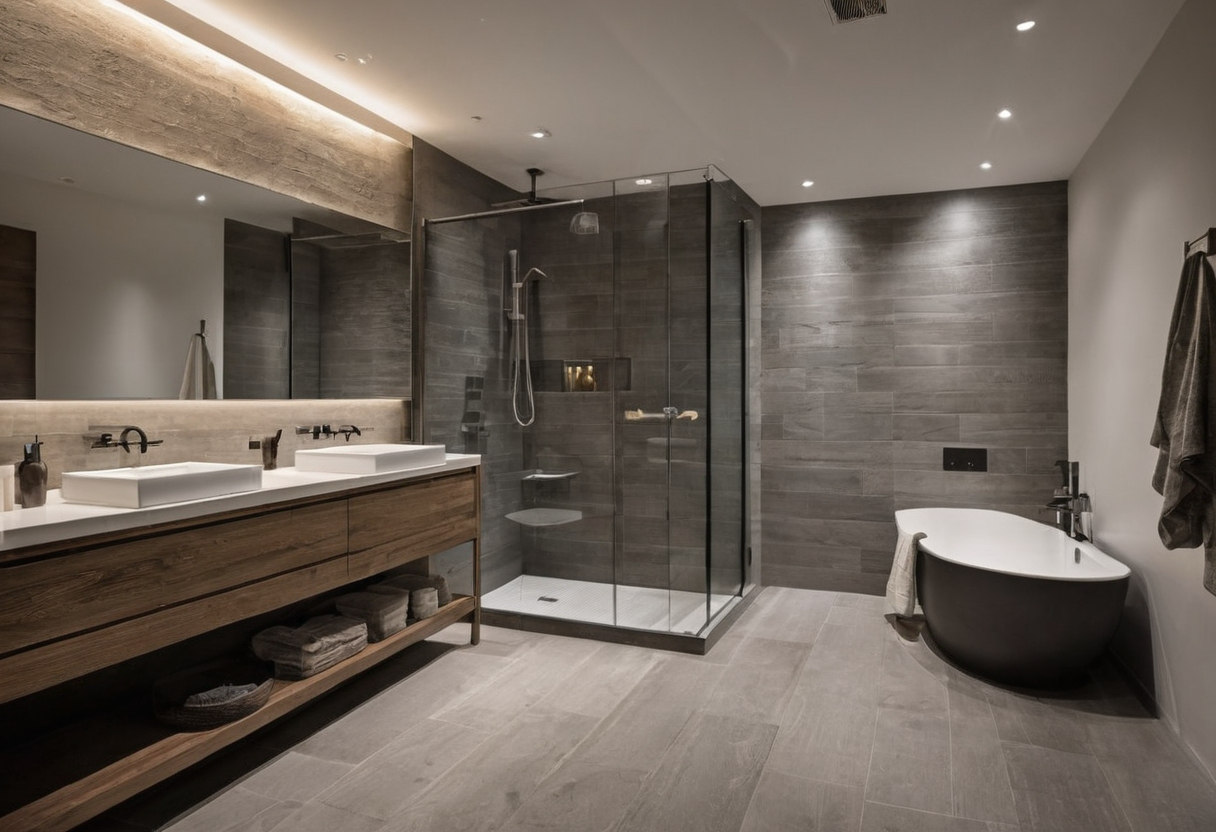
Full-service design transfers more coordination risk; consultation leaves more execution risk with the client shown with finish, fixture, and clearance relationships visible.
| Risk area | Consultation | Full-service design |
|---|---|---|
| Measurements and specifications | Client usually verifies before ordering. | Designer usually documents and checks, if included in scope. |
| Procurement and schedule | Client tracks lead times, substitutions, and deliveries. | Designer may manage ordering and vendor communication. |
| Contractor errors | Client resolves under the contractor agreement. | Designer coordinates, but is not automatically liable unless the contract says so. |
Which risks are reduced by full-service interior design?
Full-service design reduces risks tied to inconsistent selections, missed ordering details, poor sequencing, unsupported vendor communication, and installation conflicts. The reduction is strongest for custom work, high-value furnishings, construction documents, permitting, or multiple vendors.
In California, CCIDC says a Certified Interior Designer may prepare and submit nonstructural, nonseismic interior plans to local building departments, and certification reflects examination plus qualifying education, experience, or both. CCIDC also advises that a Certified Interior Designer can help with compliance, safety, and professional integrity for projects involving construction documents, building permits, or public spaces, and says Certified Interior Designers have demonstrated knowledge of the California Building Code as it relates to space planning, life safety, flammability, and accessibility.
For disputes, contracts, or regulated work, ask a local qualified professional before relying on a service description alone. The practical choice comes next: buy a consultation for clarity, and buy full-service design when execution risk needs a named owner.
A practical choice rule: buy a consultation for clarity and full-service design for execution
The simplest rule is to book a consultation when the project needs clarity and hire full-service design when the project needs execution. For residential readers, the decision should rest on complexity, available time, tolerance for mistakes, and whether the result requires professional follow-through after the first recommendation.
A single-room example can shift from consultation to full-service depending on complexity
A walk-in closet project may need only a consultation if the homeowner wants styling direction, storage priorities, color guidance, or a shopping path. The same closet moves toward full-service design when custom millwork, lighting, bespoke finishes, vendor scheduling, and installation coordination enter the scope.
Material and lighting decisions also raise the execution burden. The U.S. Environmental Protection Agency recommends increased ventilation when using products that emit volatile organic compounds indoors, and ENERGY STAR says qualified LED lighting uses at least 75 percent less energy and lasts up to 25 times longer than incandescent lighting.
A short pre-hire checklist should help the reader choose the right scope
- How many rooms need decisions, and are they connected?
- Is construction, electrical work, plumbing, or custom fabrication involved?
- Who orders products, checks lead times, and handles returns?
- Who manages vendors if an item is delayed or installed incorrectly?
- How many revisions are included?
- What deliverables will the homeowner receive: notes, plans, specifications, procurement lists, or installation support?
Choose consultation for direction, full-service design for managed execution, or a hybrid only when deliverables, approvals, ordering responsibility, and change rules are written before work begins.
FAQ
What is a project scope in interior design?
A project scope is the written boundary of the designer’s work. It should identify rooms, deliverables, fees, revisions, approvals, exclusions, purchasing responsibility, and change rules.
What does an interior design consultation include?
A consultation usually includes advisory time for a focused design question. It may include verbal guidance, sketches, notes, or a written recap only if those outputs are included in the agreement.
Is full-service interior design worth it for one room?
Full-service design can be worth it for one room if the room has custom millwork, many vendors, lighting changes, high-value orders, or installation sequencing. A simple paint, layout, or styling question usually fits a consultation better.
Can I start with a consultation and upgrade to full-service design later?
Yes, if the designer offers that path and the agreement allows it. Confirm whether the consultation fee applies to a later full-service contract, what deliverables carry forward, and when a new scope must be signed.
What should I ask before signing an interior design contract?
Ask what is included, what is excluded, who orders products, who communicates with vendors, how approvals work, how revisions are billed, and what happens when a product, budget, or timeline changes.