How to Build an Interior Design Budget Before Requesting Product Quotes
A product quote can look affordable while tax, receiving, installation, professional fees, and construction remain uncounted. Before requesting prices, convert the spending goal into an all-in worksheet that exposes every known cost, assumption, and reserve.
What must an interior design budget establish before product quotes are requested?
An interior design budget must establish the homeowner’s all-in spending ceiling, location, schedule, room list, scope, quality expectations, retained items, and exclusions. Record the jurisdiction, currency, purchasing dates, and construction dates because taxes, labor, freight, customs, lead times, and quote validity vary.
The interior design budget should begin with an all-in ceiling rather than a furniture allowance
The all-in ceiling is the maximum planned commitment across design, construction, products, tax, delivery, installation, and contingency. Label it as a firm cash limit, flexible target, or phased plan. Include permits, storage, financing, insurance, or temporary accommodation when applicable. Affordability remains the client’s decision, not an amount a designer or supplier should infer.
The interior design scope determines which budget categories apply
| Scope | Typical boundary | Primary responsibility |
|---|---|---|
| Consultation | Advice and selections | Client purchases and coordinates |
| Furnishing | Furniture, art, lighting, and window treatments | Designer, suppliers, and installers |
| Renovation | Finishes, fixtures, trades, permits, and site work | Designer and contractor |
| Full service | Design, procurement, coordination, and installation | Designer, contractor, and suppliers |
Before collecting prices, choose the interior design service scope, list included and excluded rooms, and identify items to retain. Record performance requirements as well. For applicable accessible design, the U.S. Department of Justice specifies a 30 by 48 inch clear floor space for wheelchair positioning. Where qualified products apply, ENERGY STAR states that qualified LED lighting uses at least 75 percent less energy and lasts up to 25 times longer than incandescent lighting. The next control is separating all cost categories.
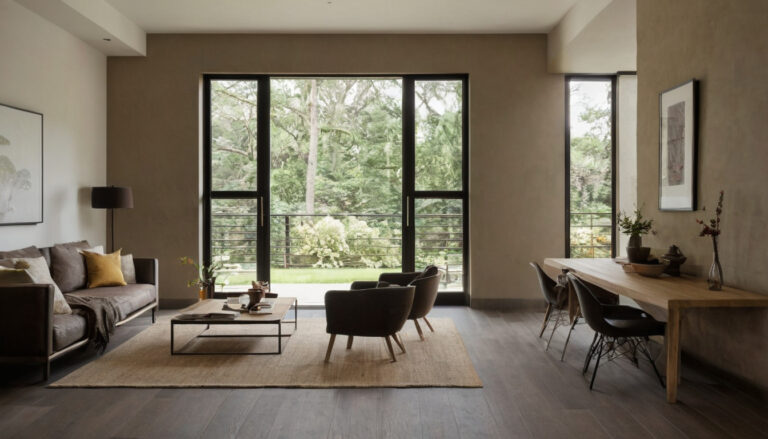
What must an interior design budget establish before product quotes are requested shown as a planning reference for layout, scale, and material decisions.
A complete interior design budget separates construction, furnishings, fees, logistics, tax, and reserves
A complete budget uses separate buckets so product prices cannot conceal construction, professional services, freight, receiving, installation, taxes, and reserves. Each line should identify who pays, who contracts the work, and whether the amount is fixed or provisional.
Construction and permanent fixtures belong in a different interior design budget bucket from furnishings
Classify cabinetry, flooring, plumbing fixtures, hardwired lighting, and similar installed elements as construction or permanent fixtures when a contractor supplies or installs them. Keep movable furniture, rugs, art, lamps, and accessories under furnishings. The governing contract and local tax rules may affect classification, so confirm the supplier and installer for every item.
| Category | Contents | Responsible party | Pricing status | Tax treatment to verify | Common omission |
|---|---|---|---|---|---|
| Construction | Demolition, flooring, millwork, wiring, plumbing, paint | Contractor or trade | Estimate or fixed quote | Materials and labor | Protection, permits, cleanup |
| Furnishings | Furniture, rugs, treatments, art, accessories | Client, designer, or supplier | Quote or allowance | Sales tax, VAT, GST, or HST | Assembly and returns |
| Professional fees | Designer, architect, engineer, consultant | Client | Fixed, hourly, or phased | Applicable service taxes | Procurement and site visits |
| Logistics | Freight, receiving, inspection, storage, delivery | Supplier or receiver | Fixed, estimated, or pending | Freight and handling | Redelivery and waste removal |
| Import costs | Duties, brokerage, customs, currency charges | Importer of record | Confirmed or provisional | Jurisdiction-specific rules | Brokerage and currency movement |
| Reserves | Contingency and unresolved risk | Client | Uncommitted | Treatment when spent | Treating reserves as available scope |
Delivery and installation must be itemized beyond the quoted product price
Delivery labels do not guarantee identical service. Curbside, threshold, room-of-choice, blanket-wrap, and white-glove delivery can include different handling, placement, assembly, and packaging-removal obligations. Request the written service scope.
- Flag stairs, elevators, restricted access, remote locations, storage, redelivery, assembly, and after-hours work.
- Mark freight as included, fixed, estimated, or billed later.
- Assign responsibility for protection, cleaning, waste, inspection, and damage claims.
Material choices can also affect installation planning. The U.S. Environmental Protection Agency identifies paints, varnishes, waxes, cleaning products, building materials, and furnishings as potential indoor VOC sources. The EPA recommends increasing ventilation when VOC-emitting products are used indoors.
Once every bucket is visible, determine whether each figure is an allowance, estimate, fixed price, alternate, or change.
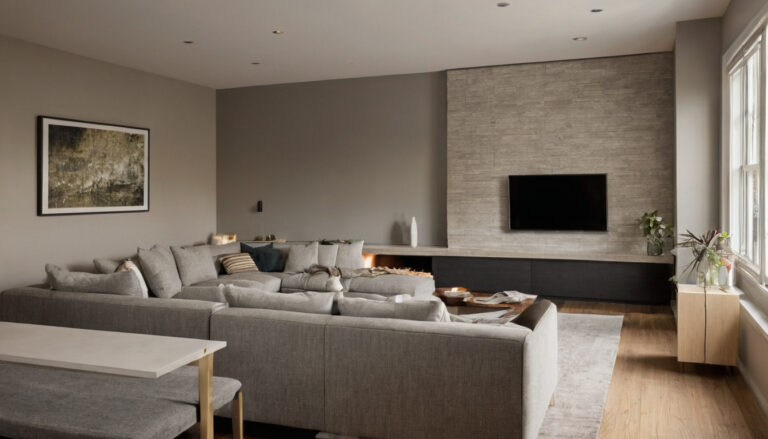
A complete interior design budget separates construction, furnishings, fees, logistics, tax, and reserves shown as an editorial reference for proportion and finish coordination.
Allowances, estimates, fixed prices, alternates, and change orders are not interchangeable
Every budget number needs a certainty label. An allowance is provisional, an estimate forecasts cost, a fixed price applies within stated conditions, an alternate prices optional scope, and a change order records an approved contractual adjustment.
| Term | Meaning | When used | What can change |
|---|---|---|---|
| Allowance | Provisional amount for incompletely selected or priced scope | Before final selection | Product, quantity, and included services |
| Estimate | Forecast based on stated assumptions | During early or incomplete planning | Price, quantity, labor, and scope |
| Fixed price | Committed price within defined conditions | After scope and terms are established | Exclusions, expiry, quantity, or approved changes |
| Alternate | Separately priced optional scope | For upgrades, deferrals, or trade-offs | Base scope, schedule, and related work |
| Change order | Documented adjustment to contract price, scope, or time | After contract execution | Cost, work, and completion date |
Contractual meanings depend on the adopted documents and jurisdiction. ConsensusDocs describes ConsensusDocs 200 and AIA A201 as two widely recognized construction documents. ConsensusDocs says it was founded in 2007 by 20 architecture, engineering, and construction organizations and now includes more than 40 coalition members and over 110 contract templates. Those facts establish industry participation, not the terms governing a particular project.
The ConsensusDocs comparison chart pairs the lump-sum ConsensusDocs 200 with AIA A101 and A201, listed as 2017 documents. It pairs ConsensusDocs 202 Change Order with AIA G701 and ConsensusDocs 203 Interim Directed Change with AIA G714. For design-build work, the chart pairs ConsensusDocs 495 for cost-plus work with a guaranteed maximum price and ConsensusDocs 496 for lump-sum work with AIA G701. The governing agreement still controls approval, price, and schedule effects.
Every interior design allowance needs a written basis and reconciliation method
A usable allowance identifies enough detail to test the final selection:
- Record the scope, quantity, assumed unit price, and quality level.
- State whether tax, freight, receiving, installation, markup, and procurement fees are included.
- List exclusions, the pricing date, and the person responsible for selection.
- Explain how the selected cost replaces the allowance and how overages, credits, tax, and markups are calculated.
Also distinguish owner-requested revisions from concealed conditions, code requirements, approved substitutions, and supplier repricing. Each event may follow a different approval and cost-allocation process.
Interior design alternates preserve choices without hiding them in the base budget
Alternates can price upgraded upholstery, custom millwork, decorative lighting, or a later phase outside the committed base total. Each alternate should show its effect on tax, delivery, installation, schedule, and related work. A priced alternate is a planned choice before acceptance; a substitution proposes a different product or method after the original basis is established.
The next task is converting these labels into a quote-ready worksheet.
How should a homeowner build a quote-ready interior design budget worksheet?
A quote-ready worksheet moves from rooms to line items, specifications, and complete delivered-and-installed costs. Each line records quantity, assumptions, responsibilities, dates, and pricing certainty before requests are issued.
- Record the all-in ceiling. Separate reserves that cannot be allocated to products or construction.
- Define the scope. List rooms, work packages, retained items, and exclusions.
- Create the line items. Use one line for each product, coordinated set, or contractor scope.
- Describe the requirement. Enter quantity, dimensions, performance needs, quality level, and target date.
- Assign the supply route. Mark each line client-supplied, designer-procured, contractor-supplied, or undecided.
- Label pricing certainty. Select confirmed quote, estimate, allowance, alternate, or unknown.
- Add related costs. Include fees, markup, tax, freight, receiving, storage, and installation without double counting.
- Reconcile the total. Compare the worksheet with the all-in ceiling before requesting quotes.
Interior design product specifications should be detailed enough for comparable quotes
A description such as “six dining chairs” allows suppliers to price materially different products. Record dimensions, material, finish, color, grade, quantity, customization, performance criteria, and permitted equivalents. Add relevant requirements for upholstery durability, lighting voltage, wet-area use, accessibility, fire safety, and building-code compliance.
Accessibility criteria must match the project location and use. The 2010 ADA Standards for Accessible Design set applicable accessible dining and work surfaces at 28 to 34 inches above the finished floor or ground. Local requirements still need verification.
Each interior design budget line needs an owner, status, date, and assumption
A reusable line-item schema includes room, item, description, quantity, specification, source, base price, fee or markup, tax, freight, receiving, storage, installation, total delivered-and-installed cost, pricing date, validity date, lead time, status, owner, and notes.
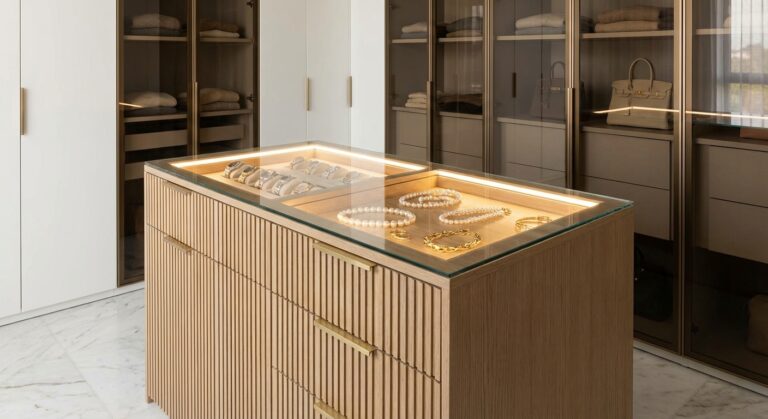
How should a homeowner build a quote-ready interior design budget worksheet shown as an editorial reference for proportion and finish coordination.
Statuses such as unresearched, allowance, estimate, quoted, approved, ordered, and paid expose stale assumptions. Name who handles selection, approval, purchase, site readiness, and installation. Attach a source and last-updated date to every amount. Competing quotes can then be tested against identical scope and commercial assumptions.
Comparable interior design quotes must use the same scope, quantities, and commercial assumptions
Quotes are comparable only when suppliers price the same specifications, quantities, destination, delivery service, installation scope, tax assumptions, schedule, and payment terms. Normalize exclusions and provisional charges because the lowest product subtotal may not produce the lowest completed cost.
An interior design quote request should ask for the complete delivered-and-installed cost
Send every bidder the same brief, drawings, room list, quantities, specifications, destination, response deadline, and requested delivery date. Require each component to be marked included, excluded, estimated, or not applicable.
- Product: Base prices, discounts, fees, markups, minimum orders, and substitutions.
- Tax and currency: Tax assumptions, quoted currency, and possible exchange-rate adjustments.
- Logistics: Freight, customs where applicable, receiving, inspection, storage, split shipments, final delivery, and waste removal.
- Installation: Labor, hardware, protection, assembly, attachment, utility connections, testing, and remedial work.
- Site conditions: Stairs, elevators, loading restrictions, openings, wall construction, utilities, access hours, and approvals.
- Commercial terms: Quote date, validity, deposit, payment schedule, cancellation, returns, warranty, lead time, and surcharges.
Interior design quote comparisons should flag exclusions and risk, not just price
The comparison should identify responsibility for field measurements, transit damage, receiving inspections, claims, site access, and delayed installation. ConsensusDocs contract guidance explains that project processes and risk allocation depend on the selected contract framework. Binding supplier and contractor terms require review under applicable local rules.
| Comparison field | What to record |
|---|---|
| Normalized total | Product, fees, tax, logistics, installation, and disposal |
| Unresolved costs | Estimates, allowances, exclusions, and pending surcharges |
| Schedule | Validity, lead time, delivery window, and dependencies |
| Commercial exposure | Deposit, payment schedule, cancellation, and returnability |
| Execution risk | Warranty, substitutions, claims, access, and risk owner |
ConsensusDocs says its comparison matrix is updated for contract changes and new document releases, so check the current matrix when selecting forms. Do not place estimates, allowances, and fixed quotes in one comparison field without visible status labels. Return incomplete quotes for clarification rather than silently supplying assumptions.
An interior design budget is ready for quotes when uncertainty and contingency are visible
A budget is ready for pricing when scope is stable, major quantities are known, responsibilities are assigned, assumptions are dated, and uncertainty has a separate contingency. The reserve should reflect project-specific uncertainty rather than a universal percentage.
Interior design contingency should match identifiable project uncertainty
Rate each risk as low, medium, or high based on scope completeness, site visibility, custom work, imports, schedule constraints, and quote validity. Concealed work, incomplete drawings, custom fabrication, imported products, long lead times, currency exposure, and phased installation require closer review.
- Construction contingency: uncertain site conditions and execution risks.
- Design contingency: unresolved details affecting quantities or specifications.
- Escalation allowance: possible price movement before purchasing or construction.
- Client discretionary reserve: optional upgrades or preference changes.
Contingency must not conceal known work. Identified demolition, freight, installation, and professional fees belong in their proper categories. Seek project-specific advice when drawings are incomplete, concealed conditions are material, or purchasing crosses currencies and phases.
A pre-quote interior design checklist confirms that the budget brief is complete
- Scope, rooms, retained items, and exclusions are confirmed.
- Quantities and specifications support comparable pricing.
- Purchasing, approval, installation, and payment responsibilities are assigned.
- Location, currency, schedule, and delivery dates are stated.
- Taxes, duties, freight, receiving, storage, delivery, and installation are addressed.
- Allowances show their basis and reconciliation method.
- Contingencies remain separate from known scope and discretionary spending.
- Approval authority and change-control procedures are documented.
Revise rather than quote if major scope, quantities, or decision ownership remain unresolved. Otherwise, issue the brief and preserve a dated baseline showing committed costs, current forecast, remaining contingency, approved changes, and projected final total.
Frequently asked questions about interior design budgets
What is a reasonable interior design budget for one room or a whole home?
No universal amount is reliable without the project location, room list, construction scope, quality level, service model, purchasing period, and included cost categories. Establish an affordable all-in ceiling, then test the proposed scope against current local quotes.
What is the difference between an interior design allowance and a fixed product quote?
An allowance is a provisional planning amount based on documented assumptions. A fixed quote is a supplier commitment within stated quantities, scope, validity dates, exclusions, and commercial terms.
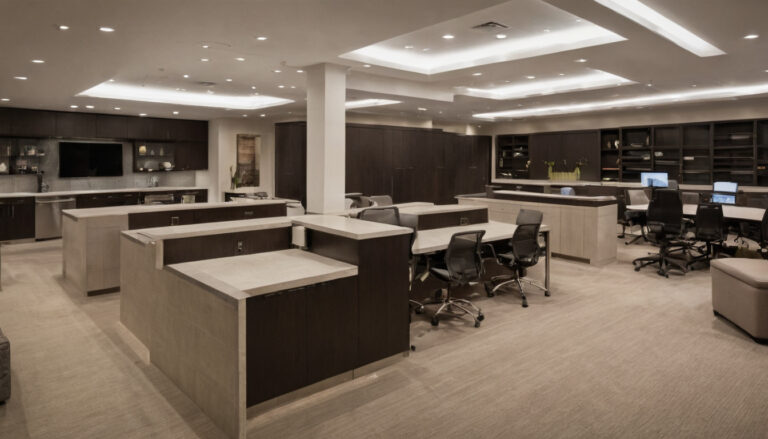
Frequently asked questions about interior design budgets shown as an editorial reference for proportion and finish coordination.
Can an interior designer charge for sourcing products and obtaining quotes?
Yes, if sourcing, procurement, or quote administration forms part of the agreed service and fee structure. The client-designer agreement should explain hourly fees, fixed fees, markups, commissions, purchasing responsibilities, and treatment of returns or credits.
How much contingency should a residential interior design budget include?
Set contingency according to identifiable uncertainty, not a universal percentage. Existing conditions, incomplete documentation, custom work, imports, schedule pressure, and contract structure should inform the reserve.
Do the 3-5-7 rule or the 70-20-10 rule determine an interior design budget?
No. Such rules may guide visual composition or color proportions, but they do not account for construction, fees, tax, logistics, installation, allowances, or project risk. A reconciled all-in worksheet remains the appropriate cost-control tool.